What am I Studying at St Andrews and Who Were John Gill and Andrew Fuller?: A Very Brief Intro to My Research

An anonymous donor recently made a generous contribution to my student account here at the university. April and I have a child on the way, and this gift came at just the right moment. We cannot even begin to express to you the gratitude we feel towards this unselfish person(s)!

In order to receive this donation, I had to write a brief outline of my research project. I decided to post that here; it describes in a succinct way who I am studying and why. Gill and Fuller are not well known today; in fact, much of my research generates stares of confusion from many of the people with whom I converse. Perhaps this brief post can introduce Gill and Fuller and explain why they merit attention.

Gill and Fuller at the University of St Andrews 

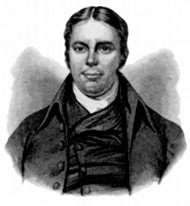
My Ph.D thesis concentrates on two British Baptist leaders of the 18th century—John Gill and Andrew Fuller. Gill ministered at the church in London that would later become associated with Charles Haddon Spurgeon. His pulpit ministry as well as his numerous commentaries and theological writings allowed him to exercise tremendous influence over Particular Baptists during his lifetime. Fuller emerged roughly one generation after Gill. His work in forming the Baptist Missionary Society, his many publications such as Gospel Worthy of All Acceptation, and his pastoral ministry in Kettering all allowed him to make his own distinct contribution to Particular Baptist life.

I desire to conduct research on these men for two reasons. First, though both were well known during their lifetimes, contemporary theologians and historians—even those from the Baptist tradition—seem to have forgotten them. Few treatments of Gill’s theology exist. This fact is unfortunate given that Gill was the first Baptist to compose a comprehensive systematic theology and the first Baptist to write a commentary on every book of the Bible. In regards to Fuller, there has been something of a renewed interest in his work recently at the popular level, primarily because of his service alongside William Carey with the Baptist Missionary Society. However, not many scholarly works on his life and thought exist. The contributions that Gill and Fuller made to Baptist life and the substantive theological works that they composed mean that deserve more attention. I hope that my work will make them more visible to contemporary pastors and theologians.

Second, Gill and Fuller, though they both ministered within the same denomination, held to differing theological convictions. Many associate Gill with a form of Calvinism known as hyper-Calvinism. The descriptor “hyper” receives usage because those who label Gill in this fashion believe that he held to Calvinistic soteriology in such a way that he denied the free offer of the Gospel to all people and denied that all people have a duty to respond to the Gospel. Some debate exists in Baptist circles over whether or not Gill indeed held to such positions and whether his theology deserves a title such as hyper-Calvinism. However, the lack of contemporary research on Gill makes it difficult to determine his true beliefs; I hope that my project can provide clarity to this debate by arguing that Gill indeed held to the convictions that many associate with hyper-Calvinism.

For his part, Fuller rejected the hyper-Calvinism found among some of the Particular Baptists of his day. He formulated a form of Calvinism that stressed duty faith, that is, the duty of all people to exercise faith in Christ. His writings sought to convince Particular Baptists of the incorrectness of the hyper-Calvinist position and bring them more in line with the concerns of the Evangelical Revival.

A comparison of Gill and Fuller should therefore prove interesting. From a theological perspective, it will address various soteriological issues. From a historical perspective, it will hopefully contribute to the study of Baptist history by offering an account of the differences and similarities between these two important men.

The first chapter of my project will explore Gill’s soteriology. The second will demonstrate how this soteriology led Gill to possess a chastened view of evangelism. Here I will interact with both Gill’s critics and defenders in an attempt to reveal his true theological identity, arguing that something akin to the descriptor hyper-Calvinism is appropriate. The remaining chapters will place Fuller in conversation with Gill, exploring where he followed Gill and also where he departed from Gill as he sought to formulate his “duty faith” form of Calvinism.
Posted in Uncategorized | 2 Comments

Andrew Fuller at the Evangelical Theological Society

andrew-fuller-1

Andrew Fuller

My thesis explores the theology of John Gill and Andrew Fuller, two Particular Baptist ministers from the eighteenth century. While it seems that Gill unfortunately receives little attention today, interest in the life and ministry of Fuller is increasing. The program for this year’s ETS meeting displays a number of paper presentations on Fuller’s theology and ministry.

This is a welcome development. Fuller greatly influenced the development of the Baptist tradition. He has appeal, though, even for those outside of the Baptist fold. I hope to write a blog post soon on why this is the case; I plan to outline briefly his work on missions, pastoral ministry, apologetics, and theology. In the meantime, I offer this post in an effort to draw attention to the research presently occurring on Fuller. I have collected below the dates and times of all the presentations at this year’s ETS that pertain to him.

Also, if  you are interested in my paper on Gill, I will be presenting on Tuesday, November 17 from 3:40-4:20pm in room 402. The title of my paper is “John Gill and Hyper-Calvinism: Assessing Recent Arguments Over Gill’s Theological Identity.”

Presentations on Fuller

  • A session devoted to Fuller’s The Gospel Worthy of All Acceptation will occur in room 206 on Tuesday, November 17 from 2:00-5:10pm. It will feature presentations from Michael Haykin (SBTS), Jeffrey Robinson (SBTS), David Lewis Allen (SWBTS), and Shane Shaddix (SEBTS). Marvin Jones from Louisiana College will moderate.
  • A session devoted to the life, thought, and legacy of Andrew Fuller will take place on Wednesday, November 18 from 8:30-11:40am in room 213. It will feature presentations from Andrew Ballitch (SBTS), Dustin Bruce (SBTS), Steve Weaver (Andrew Fuller Center at SBTS), and Gregory A. Wills (SBTS). Nathan Finn, my former church history professor and current Dean of the School of Theology and Missions at Union University, will moderate.
  • Matthew D. Haste will present a paper on Fuller’s theology of marriage on Thursday, November 19th from 1:00-1:40pm in Grand Salon A.
Posted in Uncategorized | Leave a comment

Reflections on Books I Read This Summer

As many of you will know, this summer I had the opportunity to do ministry work on North Uist, an small island just off the coast of Scotland that is part of the Outer Hebrides. The location was gorgeous, the people were friendly, and the church at which I ministered had a wonderful spirit. All in all, my time there was encouraging and rejuvenating.

While I was there, I was able to spend a lot of time reading. Specifically, I was able to focus on books that had been on my wish list for a long time.

Here is a list of interesting books from this summer that I am happy to commend to you. I by no means offer serious book reviews here; I simply supply brief personal reflections about each work. Do feel free to leave comments or make suggestions in the comments box below.

Baptist Theology by Stephen R. Holmes

51Ovm2NtOML._SX316_BO1,204,203,200_

One part survey of Baptist history and one part examination of Baptist ecclesiology, this is an excellent introduction to Baptist life. I am grateful that Steve is my supervisor here at St. Andrews.

Baptists in America by Thomas S. Kidd and Barry Hankins

51GosQ6C6CL._SX331_BO1,204,203,200_

I had the opportunity to meet Tommy Kidd and his family while there were here in St. Andrews this past spring. He is a wonderful Christian gentleman and an excellent historian. This work tells the story of Baptists in America, a story that sees the denomination transition from a small group of political and social outsiders to a large and influential religious body—and all of the tension that that this dramatic change brought.

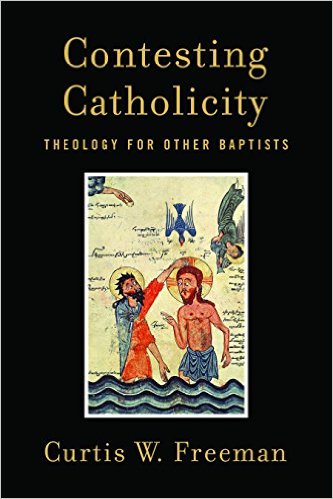
Contesting Catholicity: Theology for Other Baptists by Curtis W. Freeman

51B483wboIL._SX331_BO1,204,203,200_

There is a lot of material here, and I doubt one or two sentences will do this book justice.  Suffice it to say that this work should be read; it is fascinating. Though I disagree with Freeman on several points, the overall aim of his project is commendable. He desires to move contemporary Baptists—particularly Baptists in the United States—away from their sectarian leanings and into conversation with the church catholic.

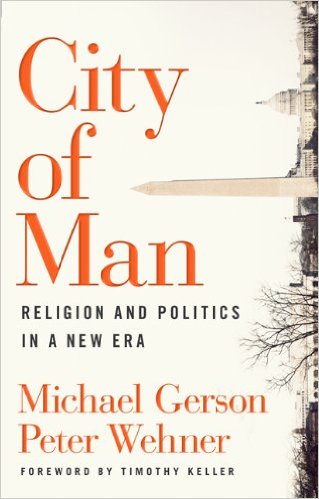
City of Man: Religion and Politics in a New Era by Michael Gerson and Peter Wehner

41ay4sz+HFL._SX317_BO1,204,203,200_-2

I have always enjoyed Michael Gerson’s articles in the Washington Post. Here he and Peter Wehner offer an outline of what they believe contemporary Christian political engagement should look like. I suspect this book will benefit both culture warriors and naive do-godders. Gerson’s use of Augustine—hence the book’s title—reminds us that no political system is perfect and that political work alone cannot bring permanent change. This fact does not mean that political involvement is unimportant, but it does help us to preserve an attitude of realism as we involve ourselves in political pursuits.

A Little Book for New Theologians by Kelly M. Kapic

31Hp9o4Nz7L._SX301_BO1,204,203,200_

Here are challenging meditations not just for new theologians but also for those of us who have tried to study theology for some time. I still feel as though I am just beginning.

Richard John Neuhaus: A Life in the Public Square by Randy Boyagoda

51Y0NXVVAhL._SX329_BO1,204,203,200_

Neuhaus lived a life of dramatic contrasts—he went from being a liberal Lutheran minister and opponent of the Vietnam War to a conservative Roman Catholic who supported the Bush administration to the point that many labeled him a neo-conservative and even a theo-conservative. Boyagoda provides an interesting presentation of the life of this ambitious and talented and never boring man.

God and the Atlantic: America, Europe, and the Religious Divide by Thomas Albert Howard

516iUuwzXNL._SX322_BO1,204,203,200_

To be honest, I do grow tired of the anti-Americanism that I often encounter here. My country is not above criticism, and there are certain things about it that do indeed trouble me, but I believe that much of the anti-Americanism I hear is both unfair and too extreme. This book simply reminds us that there is nothing new under the sun. Europe has a long history of looking down its nose at Uncle Sam, and Howard argues that the differences between the US and Europe that give rise to this attitude are in part theological, not just cultural. (Of course, to be fair to the Europeans, America has for its part displayed plenty of arrogance toward the Old World during its young lifetime.)

The Pastor Theologian: Resurrecting an Ancient Vision by Gerald Hiestand and Todd Wilson

51zY2-w8g2L._SX325_BO1,204,203,200_

I am a big fan of the renewed interest in the pastor-theologian model, and I know of no better contemporary exponents of this model than the good people at CPT. May their tribe increase!

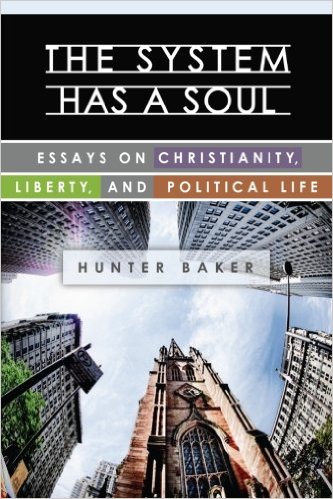
The System Has a Soul: Essays on Christianity, Liberty, and Political Life by Hunter Baker

51rgvpZ7W2L._SX331_BO1,204,203,200_

A collection of interesting essays on politics, economics, and spirituality that make for good light reading before bed.

Every Square Inch: An Introduction to Cultural Engagement for Christians by Bruce Riley Ashford

510JtApnfDL._SX343_BO1,204,203,200_

The title of this book, taken from Kuyper’s well-known statement about Christ ruling over every square inch of the creation, also makes for good light reading before bed. Bruce Ashford, the provost of the seminary I attended before I came to St. Andrews, is a good thinker and has much to say. As an aside, he named his child Kuyper. He loves him some Father Abraham. 😉

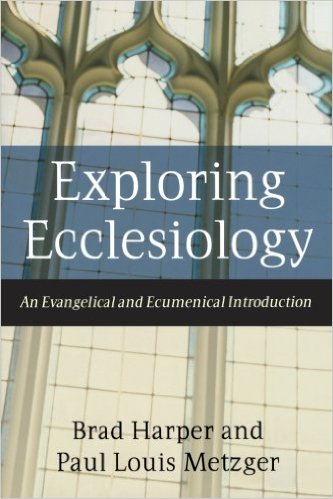
Exploring Ecclesiology: An Evangelical and Ecumenical Introduction by Brad Harper and Paul Louis Metzger

51RT8f9CoxL._SX331_BO1,204,203,200_

This is an introduction to ecclesiology written primarily for an American audience; it addresses many concerns present in contemporary American evangelicalism. There are some interesting points here, and it deserves some attention.

Posted in Uncategorized | Leave a comment

First Post

Thank you for visiting the site. I hope to offer weekly updates on my research and my life as a researcher. Visit often, and please feel free to leave comments.

Posted in Uncategorized | Leave a comment