
Baptists today debate John Gill’s theological identity; specifically, was he or was he not a no-offer Calvinist? Several convictions constituted the no-offer Calvinist position, but one of the most interesting was a belief in Adamic inability. Here I explain Adamic inability and briefly explore Gill’s rather inconsistent remarks concerning it.
No-offer Calvinists such as Joseph Hussey and John Brine argued that before the fall Adam did not possess the ability to believe the Gospel. In his pre-fall state, they reasoned, Adam would have simply had no need to believe the Gospel; sin had not yet entered creation. They then asserted that, if Adam had no ability to believe the Gospel before the fall, then humanity certainly possesses no ability to believe the Gospel after the fall. This rather simple argument became the backbone of much of their no-offer position.
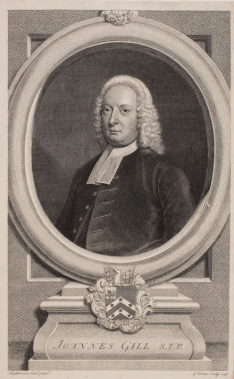
John Gill (Courtesy WikiMedia Commons)
There appears inconsistency here in Gill’s corpus, and Particular Baptist minister Andrew Fuller offers some insight into how one might interpret these statements. While Fuller referred to Gill occasionally in his important Gospel Worthy of All Acceptation, his Reply to Mr. Button features his most substantive remarks on Gill’s belief in Adamic inability. There Fuller explained that during the modern question controversy some hyper-Calvinists such as John Brine “maintained the argument from Adam’s incapacity to believe, yet Dr. Gill, when contending with the Arminians, gave it up.”
Fuller’s conclusion, then, is that Gill simply made contradictory assertions concerning Adam’s ability to believe the Gospel given his various polemical contexts. His reading has plausibility. Gill wrote The Cause of God and Truth when he involved himself in a heated attack on the Arminian theology of Daniel Whitby. It is likely that he moderated his position for rhetorical purposes; he perhaps did not wish to defend this particular conviction in the midst of an important argument over key aspects of Reformed soteriology. In his other works, however, he could espouse Adamic inability with vigor.
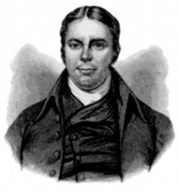
Andrew Fuller (WikiMedia Commons)
According to Gill, universal appeals in Scripture for people to trust in Christ speak primarily of outward moral reform—what he often called legal repentance—and mental assent to the truths of the Gospel. They are not clear exhortations for all people everywhere to trust in Christ; such exhortations cannot exist in the no-offer system.
Work remains for historians to explore in more detail just how Gill developed his no-offer position. It appears that the concept of Adamic inability was a part of his theology in some of his works but that he did not rest his entire argument for no-offer Calvinism upon it. He could still promote a present human inability to believe the Gospel grounded in part in human depravity. Contemporary readers of Gill should remember this point when they read his works.

 David Rathel's Research Page